Korean Bibimbap
Uitgelicht onder: Wereldklassiekers
Korean Bibimbap is a vibrant and delicious rice bowl topped with an array of colorful vegetables, meat, and a fried egg, all drizzled with spicy gochujang sauce.
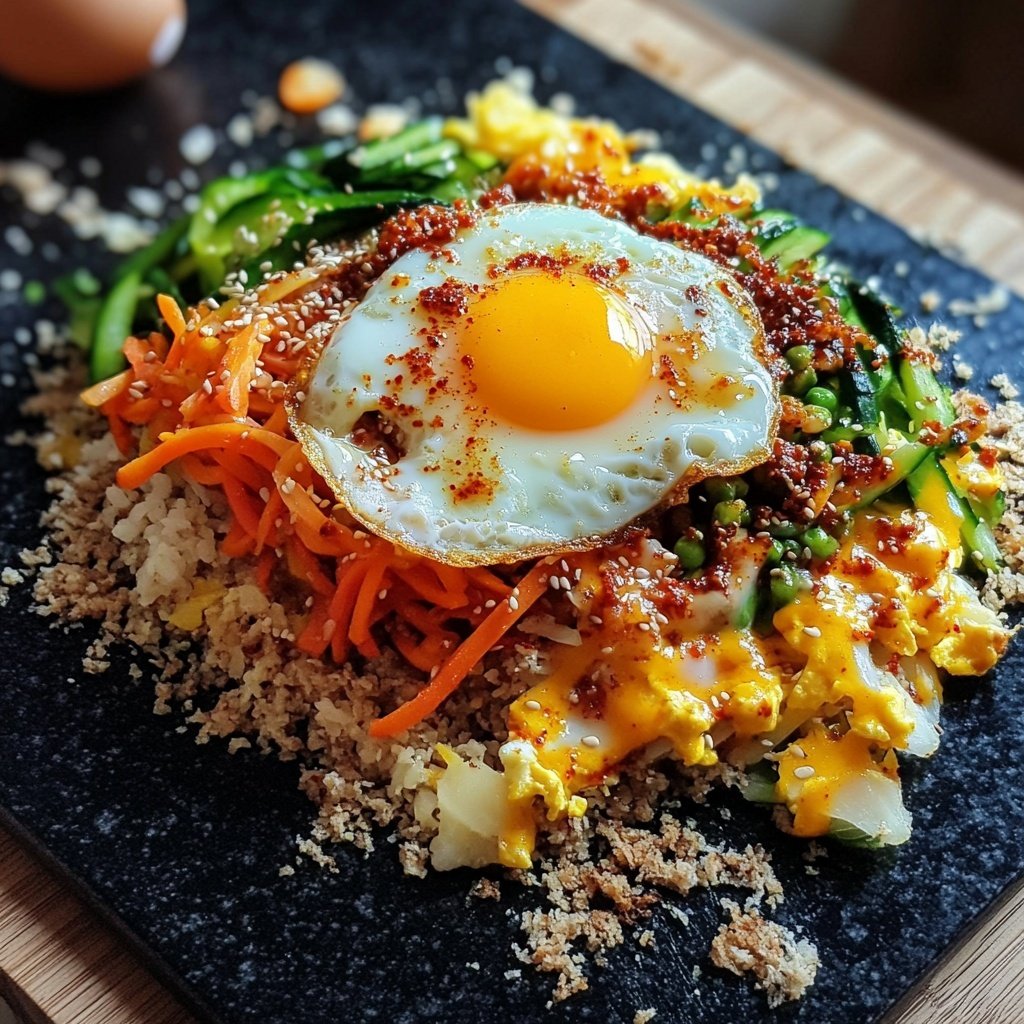
Korean Bibimbap is a traditional Korean dish that combines a variety of ingredients in a single bowl. It’s not only visually appealing but also packed with flavors and nutrients, making it a wholesome meal option.
Why You'll Love This Bibimbap
- Colorful array of fresh vegetables
- Customizable with your favorite proteins
- Deliciously spicy with gochujang sauce
- Perfect for a wholesome family meal
The Essence of Bibimbap
Bibimbap, which translates to 'mixed rice,' is a quintessential Korean dish that beautifully showcases the harmony of flavors and textures. Traditionally served in a hot stone bowl, the ingredients are layered meticulously, creating a feast for both the eyes and the palate. This dish celebrates the philosophy of 'shun,' emphasizing seasonal ingredients that not only enhance the taste but also provide a nutritional balance.
Each component of bibimbap plays a crucial role in delivering a delightful experience. The vibrant colors of the vegetables symbolize good fortune, while the spicy gochujang sauce adds a kick that elevates the dish. Whether you are enjoying it at a Korean restaurant or making it at home, bibimbap is a dish that brings people together.
Customizing Your Bibimbap
One of the best aspects of bibimbap is its versatility. You can easily customize this dish to suit your dietary preferences or to use up ingredients you have on hand. For those who prefer vegetarian options, simply replace the ground beef with tofu, tempeh, or an array of mushrooms. The vegetables can also be swapped based on what’s in season or what you particularly enjoy.
Feel free to experiment with different sauces, such as Sriracha or a homemade sesame dressing, to give your bibimbap a unique twist. Adding nuts or seeds can also introduce an exciting crunch, making your bowl even more satisfying. The possibilities are endless, allowing you to create a meal that’s uniquely yours.
Health Benefits of Bibimbap
Bibimbap is not only a feast for the senses but also a nourishing option for a balanced meal. The combination of vegetables provides a wealth of vitamins, minerals, and antioxidants that support overall health. Spinach, for example, is rich in iron, while carrots offer beta-carotene, promoting good vision and skin health.
Moreover, the inclusion of protein, whether from meat or plant-based sources, makes this dish incredibly satiating. The healthy fats from sesame oil and the addition of a fried egg contribute to a well-rounded meal, making bibimbap a great choice for anyone looking to maintain a healthy lifestyle.
Ingrediënten
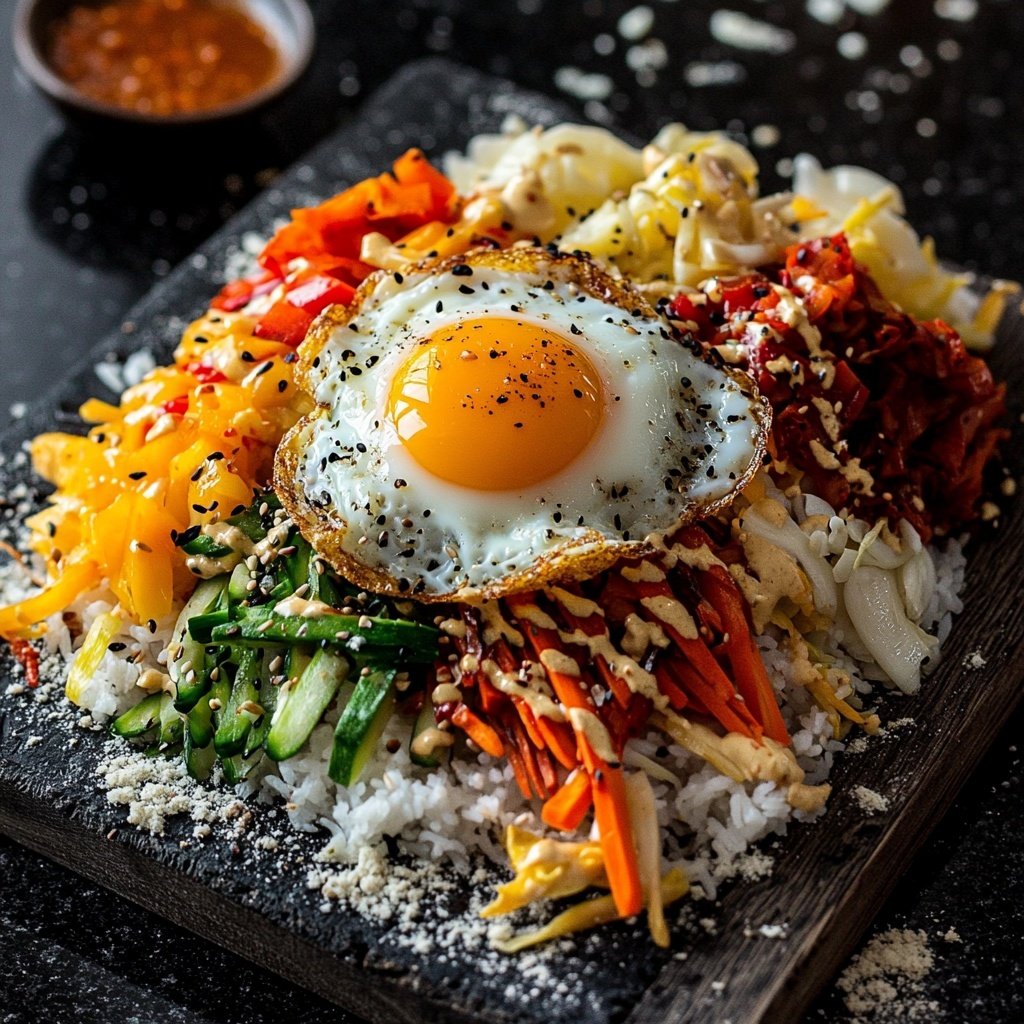
Gather the following ingredients to make your delicious Korean Bibimbap:
Ingredients
- 2 cups cooked white rice
- 1 cup spinach, blanched
- 1 cup bean sprouts, blanched
- 1 carrot, julienned
- 1 zucchini, julienned
- 1 cup shiitake mushrooms, sliced
- 1 cup ground beef (or protein of choice)
- 4 eggs
- 2 tablespoons sesame oil
- 4 tablespoons gochujang sauce
- Salt and pepper to taste
- Sesame seeds for garnish
Make sure to prep all ingredients before you start cooking for a smoother experience!
Bereidingswijze
Follow these steps to create your delicious Korean Bibimbap:
Prepare the Rice
Cook the white rice according to package instructions and keep it warm.
Sauté the Vegetables
In a pan, sauté the zucchini, carrots, and shiitake mushrooms in sesame oil until tender. Season with salt and pepper.
Cook the Beef
In the same pan, cook the ground beef until browned and cooked through. Season with salt and pepper.
Fry the Eggs
In a separate pan, fry the eggs sunny-side up until the whites are set but the yolks remain runny.
Assemble the Bibimbap
In a bowl, place a serving of rice and arrange the sautéed vegetables, beef, and blanched spinach and bean sprouts on top. Add the fried egg.
Serve
Drizzle with gochujang sauce and garnish with sesame seeds. Mix everything together before eating!
Enjoy your homemade Korean Bibimbap!
Professionele Tips
- Feel free to customize your Bibimbap with different vegetables or proteins according to your preference.
Tips for Perfect Bibimbap
To achieve the best results with your bibimbap, consider using short-grain rice, which has a stickier texture that holds the dish together beautifully. It’s also essential to ensure that all vegetables are cooked to the right tenderness without losing their vibrant color. Sauté them just until they're tender-crisp, allowing them to retain their nutrients and crunch.
When frying the eggs, keep the heat moderate to avoid overcooking the yolks. A runny yolk adds a luscious creaminess when mixed into the rice and vegetables, enhancing the overall flavor profile of the dish. Finally, don’t shy away from garnishing with sesame seeds; they not only add a nutty flavor but also a beautiful finishing touch.
Serving Suggestions
Bibimbap can be served as a main dish or as part of a larger Korean meal. Consider pairing it with side dishes like kimchi or pickled vegetables for a complete experience. These sides add various flavors and textures that complement the bibimbap perfectly.
For a fun twist, serve bibimbap in individual bowls for a family-style meal, allowing everyone to mix their own ingredients. This interactive approach not only makes the meal more enjoyable but also sparks conversation around the table. Don't forget to have extra gochujang sauce on hand for those who enjoy an extra kick!
Vragen Over Recepten
→ Can I make Bibimbap vegetarian?
Absolutely! You can substitute the beef with tofu or omit it altogether and add more vegetables.
→ What can I use instead of gochujang?
You can use a mixture of red pepper flakes and miso paste for a similar flavor, though it might not be as spicy.
→ How do I store leftovers?
Store any leftovers in an airtight container in the refrigerator for up to 2 days. Reheat before serving.
→ Can I prepare the ingredients in advance?
Yes! You can prepare the vegetables and meats a day in advance and store them in the fridge for quick assembly.
Korean Bibimbap
Gemaakt door: Isolde Bennett
Recepttype: Wereldklassiekers
Vaardigheidsniveau: Intermediate
Eindportie: 4 servings
Wat je Nodig Hebt
Ingredients
- 2 cups cooked white rice
- 1 cup spinach, blanched
- 1 cup bean sprouts, blanched
- 1 carrot, julienned
- 1 zucchini, julienned
- 1 cup shiitake mushrooms, sliced
- 1 cup ground beef (or protein of choice)
- 4 eggs
- 2 tablespoons sesame oil
- 4 tablespoons gochujang sauce
- Salt and pepper to taste
- Sesame seeds for garnish
Stappen
Cook the white rice according to package instructions and keep it warm.
In a pan, sauté the zucchini, carrots, and shiitake mushrooms in sesame oil until tender. Season with salt and pepper.
In the same pan, cook the ground beef until browned and cooked through. Season with salt and pepper.
In a separate pan, fry the eggs sunny-side up until the whites are set but the yolks remain runny.
In a bowl, place a serving of rice and arrange the sautéed vegetables, beef, and blanched spinach and bean sprouts on top. Add the fried egg.
Drizzle with gochujang sauce and garnish with sesame seeds. Mix everything together before eating!
Extra Tips
- Feel free to customize your Bibimbap with different vegetables or proteins according to your preference.
Voedingswaarde (Per Portie)
- Calories: 550 kcal
- Total Fat: 20g
- Saturated Fat: 5g
- Cholesterol: 200mg
- Sodium: 700mg
- Total Carbohydrates: 65g
- Dietary Fiber: 5g
- Sugars: 5g
- Protein: 20g